
When severe weather hits, panic is rarely caused by the storm alone.
It’s caused by uncertainty.
Where do we go?
Who grabs the kids?
What if we get separated?
What if the power goes out?
In high-stress moments, the brain struggles to make clear decisions. That’s why the most resilient families don’t improvise during emergencies. They prepare in advance.
A well-designed family storm readiness plan transforms chaos into coordination. It replaces fear with action. And most importantly, it protects the people you love.
Here’s how to move your household from panic to prepared.
Step 1: Understand Your Real Risks
Before building a plan, identify the types of storms most likely to affect your area. A family in a hurricane-prone coastal region will plan differently than one in tornado country or an area vulnerable to blizzards or flash floods.
Reliable information from the National Weather Service and Federal Emergency Management Agency can help you understand regional risks, evacuation zones, and shelter guidance.
Ask:
- Are we in a flood zone?
- Are evacuations common here?
- How much warning time do storms typically provide?
- What infrastructure is most likely to fail (power, roads, water)?
Preparedness is most effective when it is specific.
Step 2: Establish Clear Meeting Locations
One of the greatest fears during a storm is separation. A plan eliminates the guessing.
Every family should identify:
- An Indoor Safe Spot
Designate the safest area inside your home depending on the threat:
- Tornado: Interior room on the lowest floor, away from windows.
- Hurricane: Reinforced interior space away from glass.
- Flood: Highest safe level of the home (if sheltering in place).
- A Neighborhood Meeting Spot
If you must evacuate suddenly (fire, structural damage), choose a nearby, easy-to-recognize location such as a trusted neighbor’s porch or a specific landmark. - An Out-of-Area Meeting Location
If evacuation is required, identify a relative’s home, hotel zone, or public shelter outside your immediate area.
Clarity prevents confusion. Write these locations down and ensure every family member can recite them.
Step 3: Build a Reliable Communication Plan
During major storms, cell service can be unreliable. Networks become overloaded. Batteries die.
Your communication plan should include:
- An out-of-state contact person everyone can check in with.
- A shared list of phone numbers written on paper (not just stored in phones).
- A plan for text messaging, which often works when calls fail.
- Backup charging methods (battery banks, car chargers).
Teach children how to:
- Dial emergency services.
- Share their full name and address.
- Contact the designated out-of-area person.
In high stress, simple instructions save time.
Step 4: Assign Roles Before the Storm
When everyone is responsible, no one is responsible.
Assign clear, age-appropriate roles:
- One adult monitors weather alerts.
- One gathers emergency supplies.
- One ensures pets are secured.
- Older children help younger siblings.
- One person confirms doors and windows are secured.
Children benefit from responsibility. It reduces fear and increases focus.
Even young children can:
- Carry flashlights.
- Retrieve small emergency kits.
- Stay close to a designated adult.
Defined roles create structure during uncertainty.
Step 5: Assemble and Maintain Essential Supplies
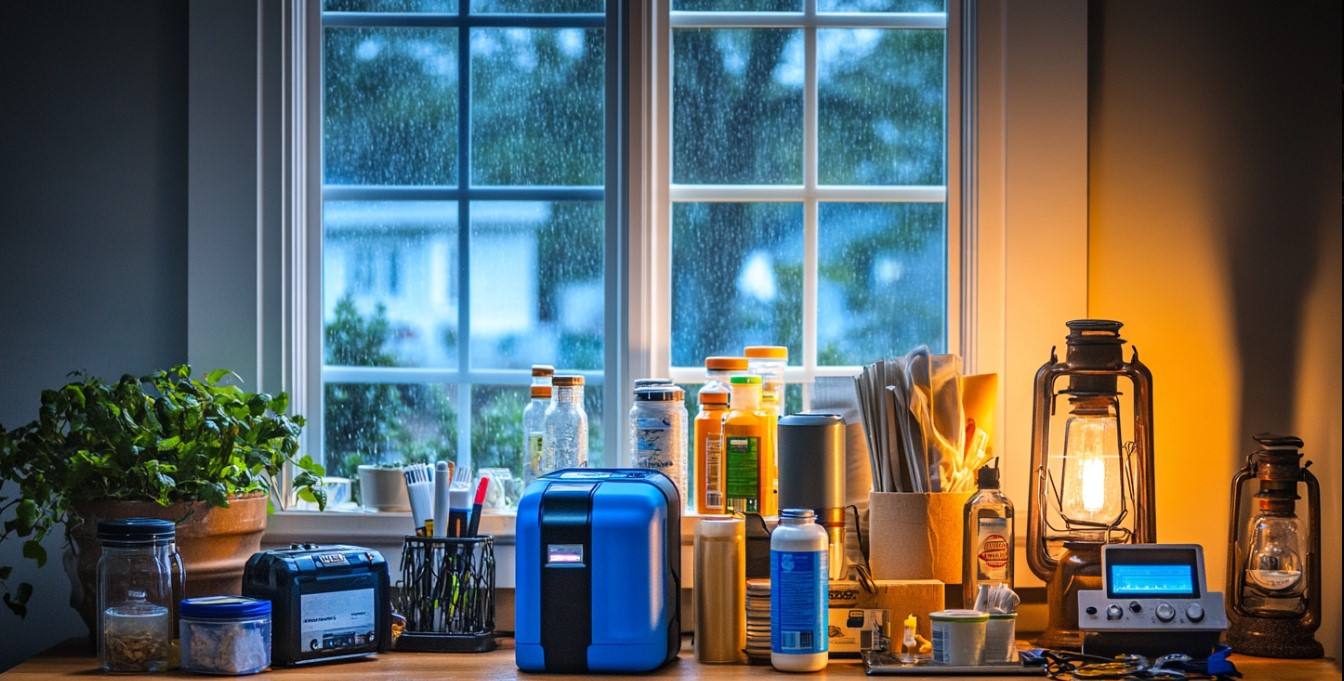
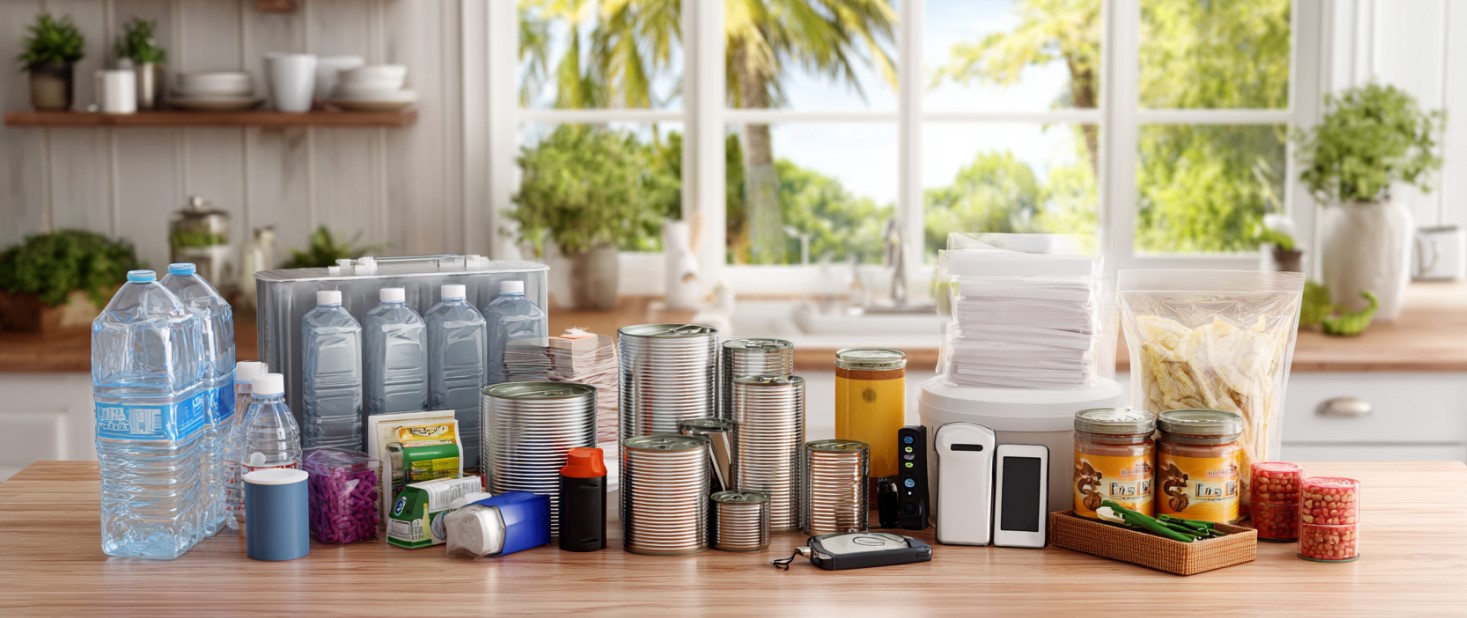
An emergency kit should support your family for at least 72 hours. Include:
- One gallon of water per person per day.
- Nonperishable food.
- Prescription medications.
- First aid supplies.
- Flashlights and extra batteries.
- Portable phone chargers.
- Important documents in waterproof storage.
- Hygiene supplies.
- Comfort items for children.
If you have infants, elderly family members, or pets, adjust accordingly.
Check supplies twice a year. Replace expired food, batteries, and medications. Rotate seasonal items as needed.
Preparedness is maintenance—not a one-time purchase.
Step 6: Plan for Evacuation—Early
Evacuations become dangerous when families wait too long.
Know:
- Your evacuation zone.
- Primary and alternate routes.
- Shelter locations.
- Pet-friendly accommodations.
Keep vehicle gas tanks at least half full during storm season. Store a “go-bag” in an accessible location.
Discuss evacuation triggers as a family:
- Official evacuation orders.
- Flood warnings reaching a certain level.
- Structural damage to the home.
Deciding in advance prevents emotional hesitation later.
Step 7: Conduct Realistic Practice Drills
Plans that live only on paper rarely work under pressure.
Practice:
- Moving to your safe room.
- Locating emergency supplies in the dark.
- Contacting your out-of-state contact.
- Loading the car efficiently.
Drills should be calm, not frightening. Frame them as teamwork exercises.
Children especially benefit from repetition. Familiar actions reduce panic.
Even practicing once or twice a year dramatically increases effectiveness.
Step 8: Address Emotional Preparedness
Storm readiness is physical and psychological.
Talk openly about storms in age-appropriate ways. Avoid catastrophic language. Focus on empowerment.
Instead of:
“This could destroy everything.”
Say:
“We have a plan to keep everyone safe.”
Encourage questions. Validate fears. Emphasize that preparation gives your family control over what you can control.
After storms, check in emotionally. Stress responses may appear days later—sleep disruption, irritability, anxiety. Recovery includes reassurance and stability.
Step 9: Protect What Matters Most
Storm damage is not limited to buildings.
Protect:
- Digital files with cloud backups.
- Printed family photos stored in waterproof containers.
- Insurance policies documented and accessible.
- Home inventories photographed for claims.
Financial preparedness reduces long-term hardship. Review insurance coverage annually and understand deductibles for storm-related damage.
Preparation shortens recovery time.
Step 10: Strengthen Community Connections
Prepared families don’t exist in isolation.
Get to know neighbors. Exchange phone numbers. Identify who may need assistance—elderly residents, people with disabilities, families with infants.
Community readiness multiplies safety.
During widespread events, emergency responders prioritize life-threatening situations. Neighbors are often first to help.
Prepared households strengthen entire communities.
Common Planning Mistakes to Avoid
Even well-intentioned families can overlook key details:
- Assuming everyone understands the plan without reviewing it.
- Failing to include pets.
- Storing supplies in hard-to-access areas.
- Forgetting special medical needs.
- Waiting until a storm is announced to prepare.
Preparation works best when it’s proactive, not reactive.
Turning Preparedness Into Peace
The goal of a family storm readiness plan is not to eliminate risk. Storms are unpredictable by nature.
The goal is confidence.
Confidence that:
- Everyone knows where to go.
- Communication is clear.
- Supplies are ready.
- Roles are defined.
- Decisions have already been made.
When winds rise and alerts sound, families with a plan move with purpose.
There is less shouting.
Less scrambling.
Less fear.
Preparedness doesn’t remove the storm.
It removes the chaos.
And in that clarity, families discover something powerful: calm is not the absence of danger—it is the presence of readiness.
References
Federal Emergency Management Agency (FEMA). Ready.gov Family Emergency Planning Resources.
National Weather Service (NWS). Severe Weather Safety Guidelines.
American Red Cross. Emergency Preparedness and Family Safety Planning Materials.
Knight, M.K., The Calm Before the Storm: Your Step-by-Step Emergency Readiness Handbook, Tin Roof Publications, 2024.